


Holiday 2026 Series
Christmas Entertainment Through the Decades: Movies, Music, Stage Shows and Holiday Trivia
From Victorian ghosts and UK pantomime to Hollywood classics, TV specials, radio crooners, Christmas pop songs and glittering holiday stage shows, festive entertainment has been reinventing itself for generations.
Every generation gets its own version of Christmas magic.
Christmas entertainment is never just one thing. It is a little bit movie marathon, a little bit theatre tradition, a little bit radio nostalgia, a little bit pop-chart chaos, and a little bit “why are we watching this again?” followed immediately by “because we watch it every year.”
In the US, holiday entertainment often brings to mind classic Hollywood movies, televised specials, touring concerts, The Nutcracker, Radio City, neighborhood light shows and a steady rotation of songs that somehow return to the charts every December.
In the UK, Christmas entertainment has its own wonderfully theatrical personality: pantomime, Christmas number ones, Dickensian stage productions, festive specials, holiday adverts, carols, comedy, and a deep cultural commitment to arguing about the best Scrooge.
This tour through the decades is not meant to be an encyclopedia. It is a festive highlight reel — full of movies, stage moments, songs, trivia and the entertainment traditions that keep coming back, year after year.
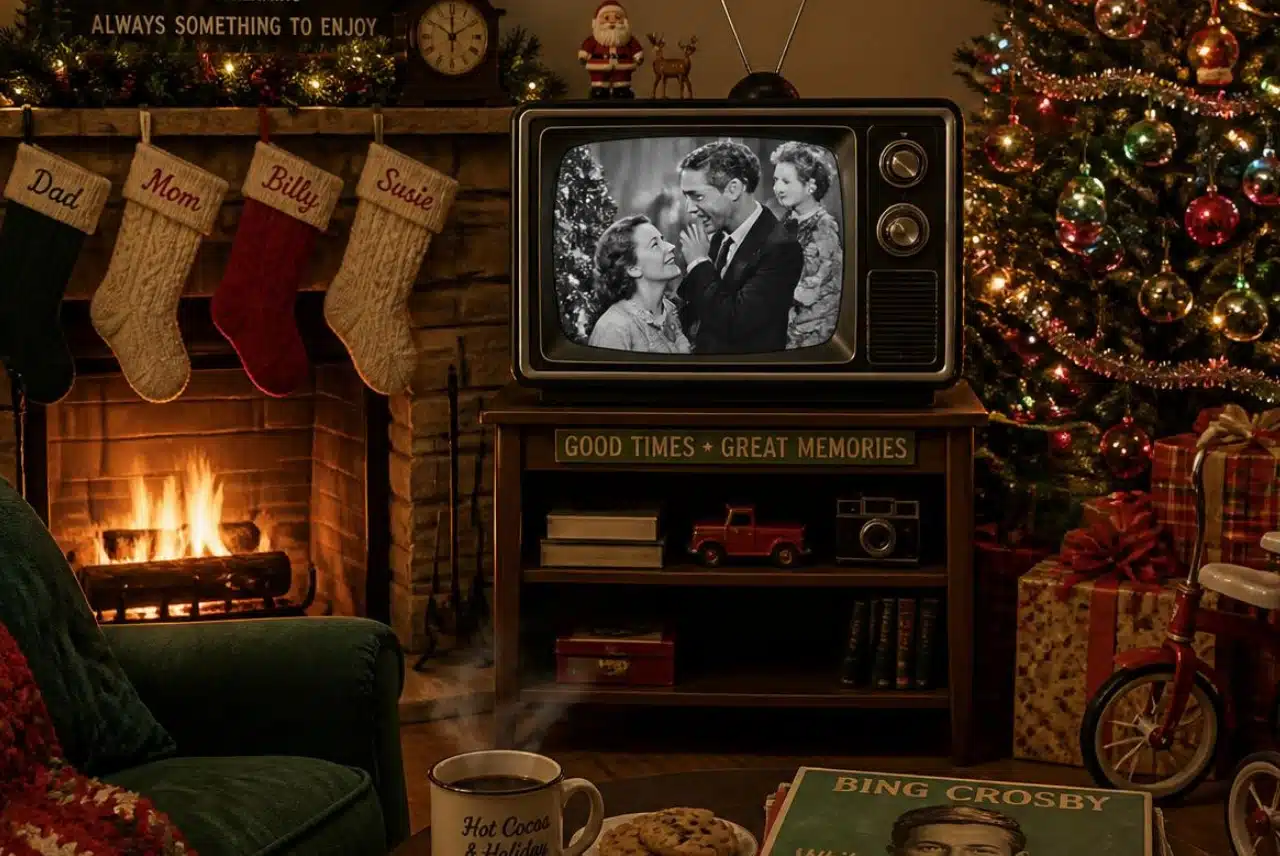
A Quick Christmas Entertainment Timeline
Holiday entertainment has always reflected the technology, tastes and traditions of its time. The 1800s gave us literary ghosts and stage spectacle. The early 1900s brought film adaptations and radio. Mid-century Christmas gave us Hollywood musicals, animated TV specials and records that became family heirlooms. Later decades added pop-chart battles, cable marathons, streaming libraries and immersive holiday experiences.
Festive Fun Fact
Charles Dickens published A Christmas Carol in 1843, and it has been haunting stages, screens and holiday imaginations ever since. The Royal Shakespeare Company notes that Dickens was responding to the poverty and hardship of Victorian England when he created the story. Source: Royal Shakespeare Company
- 1800s: Dickens, carols, variety theatre and the foundations of Christmas stage culture.
- Early 1900s: Silent films, early screen Scrooges, radio songs and department-store spectacle.
- 1930s: The Radio City Christmas Spectacular begins, and holiday stage entertainment becomes a major seasonal draw.
- 1940s–1950s: Hollywood turns Christmas into a movie tradition with musicals, miracles and small-town sentiment.
- 1960s–1970s: TV specials become annual appointment viewing.
- 1980s–1990s: Christmas pop, comedy, cable replays and family blockbusters take over.
- 2000s–today: Streaming, nostalgia, viral songs, holiday tours and immersive events reshape the season again.
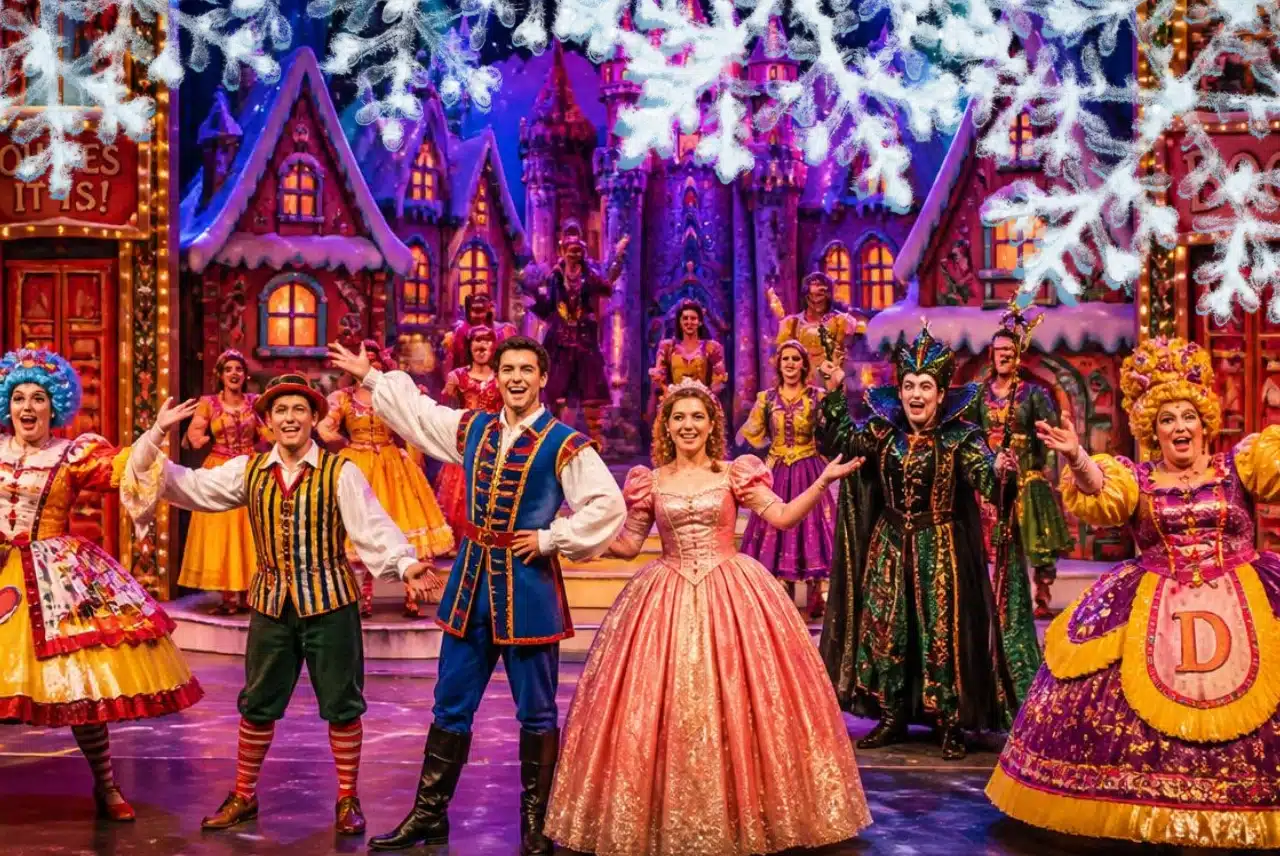
The 1800s: Ghosts, Panto and the Theatre of Christmas
Before Christmas movies and streaming specials, holiday entertainment was live, local and theatrical. Families gathered for carols, church music, seasonal readings, variety entertainment, theatre productions and community celebrations.
```In Britain, one of the biggest holiday stage traditions is pantomime, or panto — a funny, musical, audience-participation form of theatre often based on fairy tales. The Victoria and Albert Museum traces pantomime’s roots to 16th-century Italian commedia dell’arte, with later British pantomime evolving through stock characters, comedy, spectacle, music and seasonal family appeal. Source: V&A
Then came Dickens. A Christmas Carol gave the holiday season one of its most durable entertainment engines: a story that could be read aloud, adapted for stage, turned into musicals, filmed again and again, parodied by comedy shows, reimagined by puppets, and still somehow make people emotional every December.
Trivia Break
The first known film adaptation of A Christmas Carol was the British short Scrooge; or, Marley’s Ghost in 1901. The BFI notes it as the first of hundreds of screen adaptations of Dickens’ story. Source: BFI
That combination — moral storytelling, music, spectacle, comedy and a little supernatural sparkle — still defines much of Christmas entertainment today.
UK Holiday Tradition
Panto is not just a show. It is a Christmas sport.
Heroes, villains, dames, singalongs, slapstick, audience shouting and jokes for both children and adults — UK pantomime is one of the best examples of Christmas entertainment as a live community ritual.
Read the OTL Panto GuideThe 1900s–1930s: Silent Scrooges, Radio Songs and Big Stage Spectacle
The early 20th century helped move Christmas entertainment from parlors and stages to screens and speakers. Silent films brought holiday stories to moviegoers, radio helped seasonal songs travel farther, and large venues began turning Christmas into a full-scale entertainment experience.
In New York, the Radio City Christmas Spectacular became a major part of American holiday stage culture. The Christmas show dates to 1933, and the Rockettes’ precision dance style became one of the most recognizable images of Christmas entertainment in the US. Source: AP
In the UK, panto continued to grow as a seasonal fixture, while Christmas on stage leaned into fairy tales, comedy, transformation scenes, topical jokes and family tradition.
Entertainment Evolution
By this point, Christmas entertainment was no longer only something people made at home. It was becoming something people bought tickets for, listened to on the radio, watched in cinemas and returned to as a seasonal ritual.

The 1940s–1950s: Hollywood Makes Christmas Glow
The 1940s and 1950s gave Christmas entertainment some of its most enduring American screen classics. It’s a Wonderful Life, Miracle on 34th Street, Holiday Inn and White Christmas helped turn December viewing into a tradition.
The American Film Institute includes It’s a Wonderful Life among its major holiday guide selections and notes that the film ranked #20 on AFI’s list of the 100 greatest American films and #1 on AFI’s “100 Years…100 Cheers” list. AFI also highlights classic holiday films as part of seasonal movie viewing. Source: AFI
Meanwhile, in music, Bing Crosby’s recording of “White Christmas” became one of the defining holiday songs of the 20th century. Guinness World Records lists Crosby’s 1942 recording as the best-selling single for Christmas, with over 100 million records sold worldwide including at least 50 million as singles. Source: Guinness World Records
On stage, American ballet found its own Christmas cornerstone. San Francisco Ballet’s history notes that Willam Christensen staged America’s first full-length Nutcracker in 1944, helping set the stage for the ballet’s future as a holiday tradition across the US. Source: San Francisco Ballet
Trivia Break
White Christmas the song came before the 1954 movie of the same name. The song was originally associated with Holiday Inn, then became so culturally powerful that Hollywood built another major musical around it.
The 1960s–1970s: Christmas Comes to Television
If the 1940s and 1950s made Christmas cinematic, the 1960s and 1970s made it appointment television. Families gathered around annual specials, animated characters, stop-motion worlds and holiday variety shows.
Rudolph the Red-Nosed Reindeer became one of the most enduring Christmas TV traditions. Smithsonian Magazine discusses the Rankin/Bass animated special’s 1964 production and the stop-motion world that helped make Rudolph a fixture of holiday viewing. Source: Smithsonian Magazine
Television also helped Christmas entertainment become repeatable. A stage show happens once unless you go again. A movie may return to cinemas. But TV specials could become annual family appointments, creating traditions for children who later insisted on sharing the same shows with their own children.
In the UK, Christmas television specials also became a major part of the season, with comedy, drama, music and variety programming turning Christmas schedules into part of the holiday ritual.
Why It Matters
Television changed Christmas nostalgia. It made holiday entertainment something families could revisit on schedule, year after year, until the songs, voices and animation styles became part of the season itself.


The 1980s–1990s: Pop Christmas, Comedy Classics and Holiday Rewatch Culture
The 1980s and 1990s expanded Christmas entertainment in every direction. Holiday movies became funnier and more chaotic. Pop songs became seasonal powerhouses. Cable television turned repeated viewings into tradition. And the UK Christmas number one race became part music chart, part national conversation.
In the UK, Band Aid’s “Do They Know It’s Christmas?” became the Christmas number one in 1984 and returned in later versions. Official Charts notes that the original Band Aid single spent five weeks at number one and sold over a million copies in its first week. Source: Official Charts
In the US, Christmas movies grew more playful and quotable. A Christmas Story became part of annual TV marathon culture, while Home Alone turned childhood wish fulfillment, slapstick and holiday chaos into a global family favorite. The Library of Congress lists both A Christmas Story and Home Alone among films selected for the National Film Registry. Source: Library of Congress
And then, in 1994, Mariah Carey’s “All I Want for Christmas Is You” arrived and eventually became the modern holiday-pop juggernaut. In the streaming era, holiday songs do not just survive — they come back every year with chart power.
Trivia Break
The UK Christmas number one is its own kind of festive theatre. Official Charts maintains a complete list of Christmas number ones, including novelty songs, charity singles, pop icons, ballads and surprises. Source: Official Charts
The 2000s to Today: Streaming, Nostalgia and Holiday Experiences
Today’s Christmas entertainment is a giant festive buffet. You can stream black-and-white classics, queue up holiday rom-coms, see a touring concert, take the kids to The Nutcracker, watch a panto in the UK, book an immersive light trail, visit a Christmas market, sing along to a holiday movie screening, or let one algorithm quietly decide you are watching 14 royal-adjacent Christmas romances in a row.
The BFI continues to spotlight Christmas films from early cinema to modern favorites, including British Christmas titles and many versions of A Christmas Carol. Source: BFI
On stage, holiday programming has become a major seasonal pillar for theatres, ballet companies, orchestras, comedy rooms, arenas and family venues. Some audiences want tradition. Others want something brand new. Many want both: the familiar show one weekend and a fresh holiday event the next.
That is where the modern holiday season gets interesting. Christmas entertainment is no longer limited to one family movie or one annual concert. It is a season-long calendar of options: classic, campy, elegant, nostalgic, interactive, musical, theatrical, funny and sometimes just delightfully over-the-top.
Life Needs Intermission
The real lesson from Christmas entertainment history? People have always needed a reason to gather, laugh, sing, watch, remember and step out of ordinary life for a while.
US vs UK Christmas Entertainment Traditions
The US and UK share plenty of Christmas entertainment DNA — Dickens, carols, Hollywood movies, concerts, family shows and festive nostalgia. But each country has its own flavor.
Christmas Entertainment This Year
Love Christmas entertainment history? Bookmark what’s happening now.
Christmas entertainment through the decades is fun to revisit, but the best holiday tradition might be the one you start this year: a concert, panto, ballet, comedy night, light trail, holiday market, theatre performance, movie screening, or festive family outing.
OTL’s public event calendars cover the US and UK and update hourly, so they’re worth bookmarking throughout the holiday season. These public calendars are separate from private OTL Seat Fillers invitations, but they’re a great way to find Christmas shows, holiday events, festivals, concerts, theatre, and seasonal things to do near you.
Browse US & UK Event CalendarsChristmas Entertainment Trivia: Quick Hits
- Dickens did not just write a cozy ghost story. A Christmas Carol carried a social message about poverty, generosity and responsibility in Victorian England.
- UK panto is older than it looks. Its roots reach back through theatrical traditions such as commedia dell’arte, even though modern panto feels wonderfully silly and seasonal.
- The Rockettes’ Christmas tradition is almost a century old. The Radio City Christmas show began in 1933.
- The Nutcracker became an American Christmas powerhouse after 1944. San Francisco Ballet helped introduce the full-length ballet to US audiences.
- “White Christmas” is a record-breaking holiday song. Guinness World Records lists Bing Crosby’s recording as the best-selling single for Christmas.
- Some Christmas movies became classics slowly. Holiday rewatch culture, television broadcasts, cable marathons and streaming helped turn certain films into annual rituals.
- The UK Christmas number one is part chart race, part national tradition. It can include sentimental ballads, novelty singles, charity records, pop giants and total surprises.
- Christmas entertainment keeps recycling itself — and that is part of the fun. Every generation gets new versions of Scrooge, Santa, holiday romance, family chaos and festive music.
OTL Seat Fillers
Christmas entertainment is better when you actually go.
Movies and music are wonderful, but live entertainment has its own holiday sparkle: the orchestra tuning, the theatre lobby, the audience buzz, the curtain going up, the shared laugh, the final bow.
OTL Seat Fillers membership is separate from public event calendars and guides. Inside the private members-only area, complimentary ticket invitations will be offered when available in active OTL locations.
Start with How OTL WorksChristmas Entertainment Through the Decades FAQs
Some of the oldest Christmas entertainment traditions include caroling, religious music, seasonal storytelling, theatre, pantomime, public celebrations and adaptations of stories such as Charles Dickens’ A Christmas Carol.
A Christmas Carol became one of the most adaptable Christmas stories ever created. Since Charles Dickens published it in 1843, it has inspired stage productions, films, musicals, radio dramas, TV specials, parodies and modern retellings.
Pantomime, often called panto, is one of the UK’s biggest Christmas theatre traditions. It usually includes comedy, music, fairy-tale stories, audience participation, larger-than-life characters and jokes for both children and adults.
The Nutcracker became closely associated with American Christmas entertainment after San Francisco Ballet presented the first full-length American production in 1944. It later became a major annual tradition for ballet companies across the US.
The UK Christmas number one is the single at the top of the Official Singles Chart during Christmas week. Over the decades, it has become a seasonal pop-culture tradition featuring ballads, novelty songs, charity singles and major pop releases.
OTL’s public US and UK event calendars update hourly and can help readers find Christmas shows, holiday concerts, theatre, comedy, markets, festivals, family events and seasonal things to do. These public calendars are separate from private OTL Seat Fillers invitations.
Christmas entertainment is powered by nostalgia, family rituals, annual broadcasts, streaming playlists, seasonal events and shared memories. People return to familiar movies, songs and shows because they help mark the season.