


Holiday Entertainment Guide
What Is Panto? A Beginner’s Guide to Britain’s Favorite Christmas Tradition
Panto is part fairy tale, part musical, part comedy show, part Christmas chaos, and one of the most joyful theatre traditions in the UK.
Imagine Disney, Monty Python, a Broadway musical, a Christmas concert, and your funniest uncle all collided on one stage.
Oh — and the audience is expected to shout at the actors.
Welcome to the wonderfully bonkers world of British pantomime, better known simply as panto.
If you’re visiting the UK during the holidays, planning a festive theatre trip, or wondering why your British friends suddenly start yelling “He’s behind you!” every December, this guide is for you.
Panto is loud, silly, musical, colorful, family-friendly, and proudly ridiculous. It is also one of the UK’s most beloved Christmas traditions.
What Is Panto? The Quick Answer
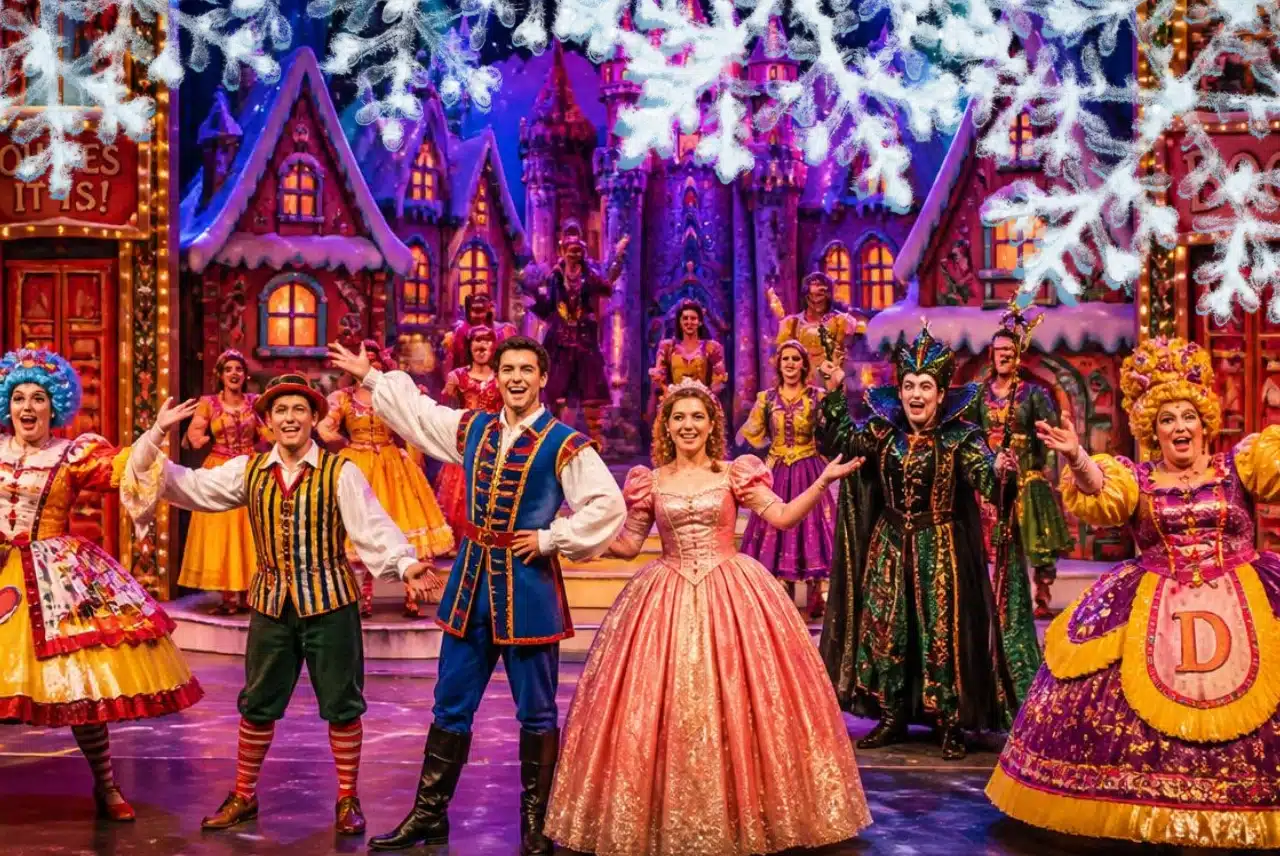
Panto is short for pantomime, a British holiday theatre tradition usually performed around Christmas and New Year. Most pantos are loosely based on familiar fairy tales or children’s stories, but they add comedy, songs, dancing, slapstick, audience participation, villains to boo, heroes to cheer, and a larger-than-life comic character called the Dame.
Best For
Families, theatre lovers, UK visitors, and anyone who thinks normal theatre could use more shouting.
Season
Most pantos run from late November through early January, with Christmas as the big sparkling centerpiece.
Expect
Comedy, music, audience participation, fairy-tale chaos, pop songs, and jokes for kids and adults.
Big Rule
If the villain appears, boo. If someone is behind the hero, shout. If the Dame enters, prepare yourself.
Good to Know
British panto is not silent mime. It is loud, interactive, musical, colorful, and often completely over the top. No invisible box required.
So, What Is Panto?
A pantomime, or panto, is a theatrical production traditionally performed during the holiday season in the UK. Most pantos are based on stories audiences already know, such as Cinderella, Aladdin, Jack and the Beanstalk, Snow White, Sleeping Beauty, Peter Pan, Beauty and the Beast, or Dick Whittington.
But don’t expect a quiet fairy tale retelling.
Panto takes a familiar story and tosses in modern jokes, pop songs, local references, slapstick, comedy routines, magical transformations, wild costumes, and a level of audience involvement that would make most ushers quietly reach for a stress biscuit.
That is the magic. Panto is part musical, part comedy show, part fairy tale, part holiday ritual, and part controlled mayhem.
Children love the spectacle. Adults love the cheeky jokes. Grandparents love the tradition. Performers love the freedom to be gloriously ridiculous. Everyone gets to be part of the fun.
Why Is Panto a Christmas Tradition?
Panto’s roots go back centuries, with influences from commedia dell’arte, music hall, variety theatre, fairy tales, and British popular entertainment. Over time, those ingredients blended into the festive family theatre tradition audiences know today.
The Christmas connection makes perfect sense. Families gather. Children are out of school. Theatres want big seasonal shows. And everyone is just a little more willing to embrace sequins, slapstick, magical pumpkins, and a villain who deserves to be booed in public.
For many families in the UK, seeing a panto is as much a part of the holiday season as Christmas lights, mince pies, festive jumpers, and trying to remember where the good wrapping paper went.
Holiday Spotlight
Panto is not just about the plot. It is about the shared experience: laughing together, shouting together, cheering the hero, booing the villain, and making live entertainment part of the season.
Why Do People Shout During Panto?
Because they are supposed to.
In most theatre settings, shouting at the stage is frowned upon unless something has gone very wrong with the chandelier. In panto, shouting is part of the fun.
The audience is encouraged to warn characters, argue with villains, cheer the hero, boo the baddie, and shout classic catchphrases at exactly the right moment.
That is one reason panto is such a great first theatre experience for children. They do not have to sit silently for two hours pretending to be tiny opera critics. They get to participate.

“He’s behind you!”
The classic warning when the villain or comic troublemaker is very obviously lurking nearby.
“Oh yes it is!”
Usually part of a call-and-response argument between the cast and audience.
“Oh no it isn’t!”
The equally important reply. Timing matters. Volume helps.
“Boooo!”
Reserved for the villain, who will almost certainly enjoy it far too much.
The Characters You’ll Meet in Panto
Every panto is different, but many use familiar character types that audiences instantly recognize. Once you know them, you’ll start spotting the pattern.
The Hero
The brave, good-hearted lead. They may be a prince, princess, adventurer, or underdog trying to save the day.
The Villain
The character everyone loves to boo. Panto villains are dramatic, wicked, hilarious, and deeply committed to their own nonsense.
The Fairy
The magical helper who keeps the story moving, rescues the hero, and often speaks directly to the audience.
The Dame
A larger-than-life comic character, traditionally played by a man in extravagant costume. The Dame often steals the show.
The Comic Sidekick
The lovable troublemaker who creates chaos, tells jokes, and usually needs the audience’s help.
The Audience
Yes, you count. Panto does not fully work unless the audience cheers, boos, laughs, shouts, and plays along.
Good vs. Evil, But Make It Sparkly

The villain is supposed to be dramatic.
One of the great joys of panto is that everyone knows who to root for and who to boo. The Fairy, Fairy Godmother, or magical helper brings sparkle, hope, and maybe a wand with excellent timing.
The villain, meanwhile, sweeps in with dramatic lighting, dark costumes, terrible plans, and the kind of stage presence that practically begs the audience to hiss.
Children love having permission to boo. Adults love watching the villain eat it up. The performer playing the villain? Usually having the time of their life.
What Is a Panto Dame?
The Panto Dame is one of the most iconic parts of the tradition.
The Dame is usually a comic older female character, traditionally played by a male performer in spectacularly exaggerated costume. Think huge wigs, wild makeup, enormous dresses, outrageous entrances, and enough personality to power the Christmas lights on Oxford Street.
The Dame is not there to be subtle. The Dame is there to make the audience laugh, flirt shamelessly with unsuspecting adults in the front row, deliver jokes, change costumes at impossible speed, and generally behave like the festive chaos coordinator.
For Americans seeing panto for the first time, the Dame can be surprising. In the UK, it is a cherished comic tradition, and a great Dame can become the highlight of the entire show.

Five Things That Surprise Americans About Panto
1. The audience talks back
Not only is it allowed, it is expected. Quiet audiences make panto performers work harder.
2. The villain wants boos
A good panto villain feeds on boos like a Christmas goblin with excellent stage presence.
3. The jokes work on two levels
Kids get the silly bits. Adults catch the cheekier lines. Everyone leaves happy.
4. Pop songs may appear
Panto is not precious about music. A fairy tale can suddenly become a singalong, and honestly, why not?
5. The story is only the beginning
You may recognize Cinderella or Aladdin, but panto adds jokes, dances, local references, and complete nonsense.
Bonus: adults love it too
Panto may be family-friendly, but it is absolutely not just for children.
Lost in Translation
If you are American, the word “pantomime” may make you think of silent performers trapped in invisible boxes. British panto is not that. This kind of panto is loud, musical, colorful, interactive, and sometimes wearing a dress large enough to qualify as architecture.
Famous Actors and Celebrities in Panto
One reason panto remains so popular is that it attracts performers from every corner of entertainment: theatre actors, comedians, television personalities, pop stars, soap actors, reality TV names, and national treasures who know exactly how to work a holiday crowd.
Over the years, audiences have seen major names step into panto roles, including performers such as Ian McKellen, David Hasselhoff, Julian Clary, Christopher Biggins, Craig Revel Horwood, Pamela Anderson, and many more.
Why do famous people do panto? Because it is live, immediate, funny, and wildly responsive. A panto audience tells you exactly how they feel. Quiet applause? Not enough. Booing the villain? Better. Children screaming “He’s behind you!” at full volume? Now we’re in business.
Behind the Curtain
Panto gives performers a rare chance to be theatrical, silly, musical, topical, spontaneous, and completely connected to the audience. It is a workout in comedy timing with tinsel attached.
Panto Survival Guide for First-Timers
Seeing your first panto? Excellent choice. Here’s how to enjoy the festive chaos without wondering whether you missed a memo.
Do cheer the hero
They are having a very dramatic day and could use your support.
Do boo the villain
They expect it. They may even demand better boos.
Do shout the catchphrases
Especially “He’s behind you!” when someone is clearly, obviously, dramatically behind the hero.
Do bring your sense of humor
Preferably the stretchy kind. Panto is not here to be dignified.
Most importantly, do not worry about doing it wrong. The cast will guide you. The audience will join you. The villain will probably insult you. That’s theatre magic, panto edition.
Make It a Full Holiday Theatre Outing

Panto is already festive, but it becomes even better when you build an outing around it.
- See Christmas lights before or after the show.
- Visit a holiday market for snacks, gifts, and people-watching.
- Plan hot chocolate or mulled wine before curtain time.
- Take a family photo outside the theatre marquee.
- Choose a new panto every year and turn it into a tradition.
The show is the centerpiece, but the memories often start before you even sit down.
Holiday Intermission: Traditional Mince Pies
Every OTL Holiday Guide gets a little festive treat, and for panto, it has to be mince pies.
These small British Christmas pastries are filled with sweet mincemeat, usually a mix of dried fruits, spices, citrus, and sometimes a splash of brandy. Despite the name, modern mince pies usually do not contain meat, which is good news if you were picturing a tiny beef pot pie in a Santa hat.
Mince pies are a classic UK Christmas treat, and they pair beautifully with a cup of tea, hot chocolate, or a festive pre-show drink before heading to the theatre.
Easy Holiday Idea
Serve mince pies before a family theatre outing, or make them part of a panto watch party if you are introducing friends to British Christmas traditions.

Life Needs Intermission
Panto is joyful chaos, and honestly, the holidays need more of that.
Live entertainment has a way of turning an ordinary night into a memory. Whether you are cheering at your first panto, seeing a holiday concert, laughing through a comedy show, or discovering a new festive tradition, the point is simple: get out, enjoy the moment, and let life feel a little more magical.
See How OTL WorksMore Panto and Holiday Theatre Ideas
Looking for more festive entertainment inspiration? Explore current holiday theatre news, panto stories, and seasonal show ideas below.

What Does Panto Have to Do With OTL Seat Fillers?
OTL Seat Fillers is all about helping people discover live entertainment they might not have experienced otherwise. Panto fits that spirit perfectly.
It is joyful. It is theatrical. It is a little strange in the best possible way. And it reminds people that going out to see something live can become a tradition, not just a night on the calendar.
OTL never promises specific shows, and all seat filler invitations depend on availability. But holiday productions, theatre, comedy, music, and live entertainment are exactly the kinds of experiences that make the season feel special.
Christmas Curtain Call
Now you’re ready for panto.
If you remember nothing else, remember this: panto is supposed to be joyful chaos.
Cheer loudly. Boo proudly. Shout “He’s behind you!” when the moment arrives. Laugh at the Dame. Root for the hero. Side-eye the villain. Eat a mince pie.
Life needs intermission, and sometimes that intermission comes with sequins, slapstick, and a fairy godmother.
What Is Panto? FAQs
Panto is short for pantomime, a British theatre tradition usually performed during the Christmas season. It combines comedy, music, fairy-tale stories, audience participation, and over-the-top characters.
No. In the UK, pantomime usually means a loud, colorful, interactive holiday stage show. It is very different from silent mime performance.
Audience participation is part of the tradition. Viewers are encouraged to boo the villain, cheer the hero, warn characters, and shout classic lines like “He’s behind you!”
No. Panto is family-friendly, but adults enjoy it too. Many productions include jokes, music, local references, and comic performances designed to entertain all ages.
Panto season usually runs from late November through early January, with many productions scheduled around Christmas and New Year.
Popular panto stories include Cinderella, Aladdin, Jack and the Beanstalk, Snow White, Sleeping Beauty, Peter Pan, Dick Whittington, and Beauty and the Beast.
A Panto Dame is a larger-than-life comic character, traditionally played by a male performer in exaggerated costume and makeup. The Dame is one of the most beloved parts of British pantomime.